
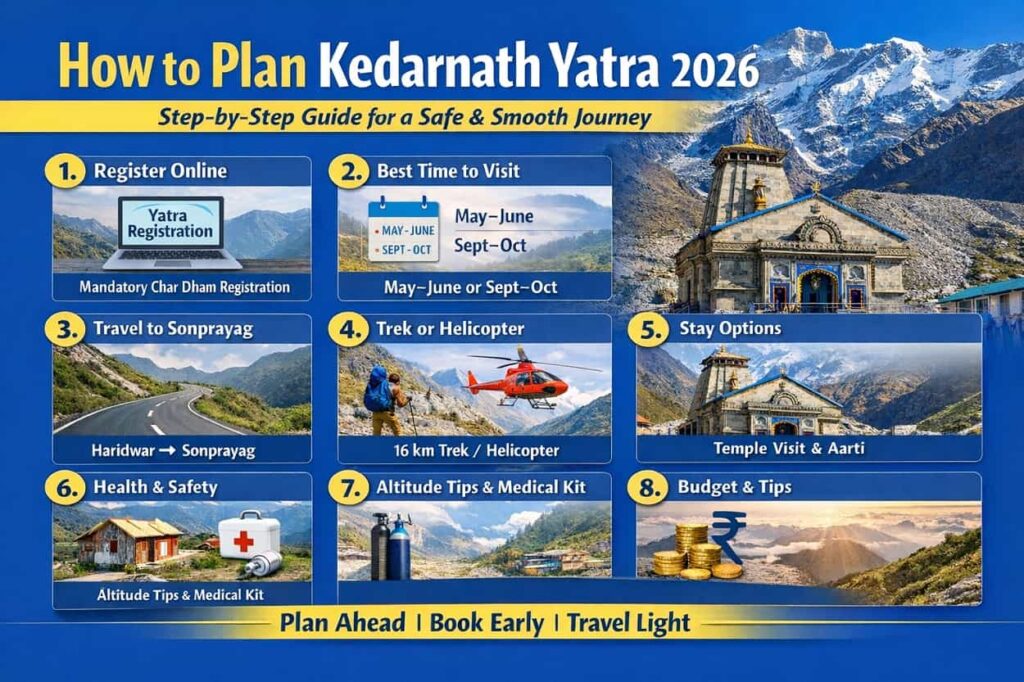
Planning a Kedarnath Yatra requires careful preparation due to the shrine’s high altitude (3,583 m), short pilgrimage window, and strict government regulations. Kedarnath Temple, one of the 12 Jyotirlingas of Lord Shiva, is located in the Garhwal Himalayas of Uttarakhand and is accessible only for a few months every year due to extreme weather conditions.
This guide explains how to plan Kedarnath Yatra step by step, covering registration, best time to visit, routes, helicopter options, accommodation, packing tips, and safety guidelines — all backed by official sources.

1. Understand Kedarnath Yatra Opening & Closing Dates
Kedarnath Temple opens every year on an auspicious date decided by the Badrinath–Kedarnath Temple Committee (BKTC) after Maha Shivratri. The temple generally opens in late April or early May and closes around October–November (after Bhai Dooj), depending on weather conditions.
- The shrine remains closed during winter due to heavy snowfall.
- During winter, the idol is shifted to Omkareshwar Temple, Ukhimath.
Always confirm dates from official BKTC or Uttarakhand Tourism announcements before planning.
- Suggested to Read: Chardham Yatra Opening Closing Dates 2026
2. Mandatory Kedarnath Yatra Registration (Most Important Step)
Yatra registration is compulsory for every pilgrim visiting Kedarnath.
How to Register:
- Online registration via Uttarakhand Tourism’s official Char Dham portal
- Offline registration counters at Haridwar, Rishikesh, Sonprayag, and other transit points
You must carry:
- Government ID proof (Aadhaar / Passport / Voter ID)
- Registration slip (digital or printed)
Pilgrims without registration are not allowed to proceed beyond checkpoints.
- Suggested to Read: Chardham Yatra Registration 2026
3. Best Time to Visit Kedarnath
Ideal Months:
- May to June: Best weather, peak season, high crowd
- September to early October: Clear skies, fewer crowds, colder temperatures
Avoid:
-
July–August (Monsoon): High risk of landslides, road closures, and helicopter cancellations
Weather in Kedarnath can change suddenly even in peak season, so buffer days are strongly recommended.
4. How to Reach Kedarnath (Route Planning)
Step 1: Reach Haridwar / Rishikesh
- Well connected by train and road
- Nearest airport: Jolly Grant Airport, Dehradun
Step 2: Travel to Sonprayag
- Haridwar/Rishikesh – Rudraprayag – Guptkashi – Sonprayag
- Roads are motorable up to Sonprayag only
Step 3: Sonprayag to Gaurikund
-
Shared taxi required (private vehicles not allowed)
Step 4: Gaurikund to Kedarnath (16 km Trek)
Gaurikund to Kedarnath is the classic pilgrimage trek in Uttarakhand. Here are some options available:
- On foot
- Pony / mule
- Palki
- Helicopter (Phata / Guptkashi / Sersi)
5. Kedarnath Yatra by Helicopter (Senior-Friendly Option)
Helicopter services are regulated by UCADA and bookings are managed through IRCTC Heli Yatra portal.
Key Points:
- Short flight (8–15 minutes)
- Weather dependent
- Limited seats per day
- Same-day return options available
Helicopter services operate from:
- Phata
- Guptkashi
- Sersi
Only book through official IRCTC heli portal to avoid fraud.
6. Accommodation Planning in Kedarnath Yatra
Best Places to Stay:
- Guptkashi / Sitapur / Sonprayag: Before trek
- Kedarnath: Limited GMVN tents and lodges
- Gaurikund: Budget lodges
Accommodation near Kedarnath temple is very limited and should be booked well in advance, especially in May–June.
7. Kedarnath Darshan Process & Timings
Daily Schedule (Subject to weather)
- Morning darshan starts around 4:00 AM
- Evening aarti before temple closes at night
VIP darshan is not officially guaranteed, but senior citizens and helicopter pilgrims often receive assisted darshan depending on crowd conditions.
8. Medical Fitness & Health Preparation
Due to high altitude, pilgrims may experience:
- Breathlessness
- Fatigue
- Mild altitude sickness
Medical Advice:
- Carry prescribed medicines
- Avoid alcohol and smoking
- Walk slowly during trek
- Acclimatize at Guptkashi/Sonprayag
Senior citizens and heart patients should consult a doctor before planning.
9. What to Pack for Kedarnath Yatra
Essential Items:
- Warm jacket, thermal wear
- Raincoat / poncho
- Trekking shoes with grip
- Woolen cap, gloves
- Power bank
- Torch
- Basic medicines
Documents:
- Yatra registration slip
- Original ID proof
- Helicopter ticket (if applicable)
Avoid carrying unnecessary luggage; ponies and palkis charge extra for weight.
10. Safety Guidelines & Do’s and Don’ts
Do’s:
- Follow local administration instructions
- Check weather updates daily
- Start trek early in the morning
- Stay on designated routes
Don’ts:
- Avoid night trekking
- Do not travel during heavy rainfall alerts
- Avoid booking through unauthorized agents
Uttarakhand authorities may temporarily stop movement during bad weather for pilgrim safety.
11. Estimated Budget for Kedarnath Yatra
Approximate costs (per person):
- Road travel + stay + trek: ₹8,000 – ₹15,000
- Helicopter (one side): ₹4,000 – ₹6,000 (subject to revision)
- Pony / palki: Variable, regulated by local authorities
Costs vary by season, demand, and travel style.
12. Kedarnath Yatra Planning Tips (Expert Advice)
- Keep 1–2 buffer days in itinerary
- Start trek before 7 AM
- Book hotels and helicopter tickets early
- Prefer September for peaceful darshan
- Travel light and stay hydrated
FAQs
Q1. Is Kedarnath Yatra registration compulsory?
Ans: Yes, registration is mandatory for all pilgrims.
Q2. How difficult is the Kedarnath trek?
Ans: The 16 km trek is moderate to difficult due to altitude.
Q3. Can senior citizens visit Kedarnath?
Ans: Yes, especially via helicopter or palki with medical fitness.
Q4. Is helicopter service safe?
Ans: Yes, but flights depend on weather conditions.
Q5. Which month is best for Kedarnath Yatra?
Ans: May–June and September are considered best.
Q6. How long does it take to complete Kedarnath Yatra?
Ans: Kedarnath Yatra usually takes 3–5 days, depending on travel route, weather, and whether you trek or use helicopter services.
Q7. Is offline registration available for Kedarnath Yatra?
Ans: Yes, offline registration counters are available at Haridwar, Rishikesh, Sonprayag, and other transit points, but online registration is recommended.
Q8. Can I visit Kedarnath in one day?
Ans: Yes, same-day return is possible only via helicopter, subject to weather and slot availability.
Q9. Is night stay allowed near Kedarnath Temple?
Ans: Yes, limited accommodations such as GMVN tents and lodges are available near the temple during the yatra season.
Q10. Do I need a medical certificate for Kedarnath Yatra?
Ans: A medical certificate is not mandatory, but senior citizens and people with health issues are strongly advised to consult a doctor before traveling.
Q11. Is mobile network available in Kedarnath?
Ans: Mobile connectivity is very limited. Only BSNL works intermittently near Kedarnath and along parts of the route.
Q12. Are ponies and palkis easily available?
Ans: Yes, ponies and palkis are available at Gaurikund, and their rates are regulated by local authorities.
Q13. What is the altitude of Kedarnath Temple?
Ans: Kedarnath Temple is located at an altitude of approximately 3,583 meters (11,755 feet) above sea level.
Q14. Is photography allowed inside Kedarnath Temple?
Ans: Photography and videography are not allowed inside the temple premises and are restricted near sanctum areas.
Q15. What should I avoid while planning Kedarnath Yatra?
Ans: Avoid traveling during monsoon alerts, booking from unauthorized agents, overpacking, and rushing the trek without acclimatization.
Final Thoughts
Planning a Kedarnath Yatra properly ensures a safe, smooth, and spiritually fulfilling experience. From mandatory registration and route planning to weather awareness and health preparation, every step matters due to the shrine’s remote Himalayan location.
With the right preparation and official bookings, Kedarnath Yatra becomes not just a journey — but a deeply transformative spiritual experience.
Suggested Tour