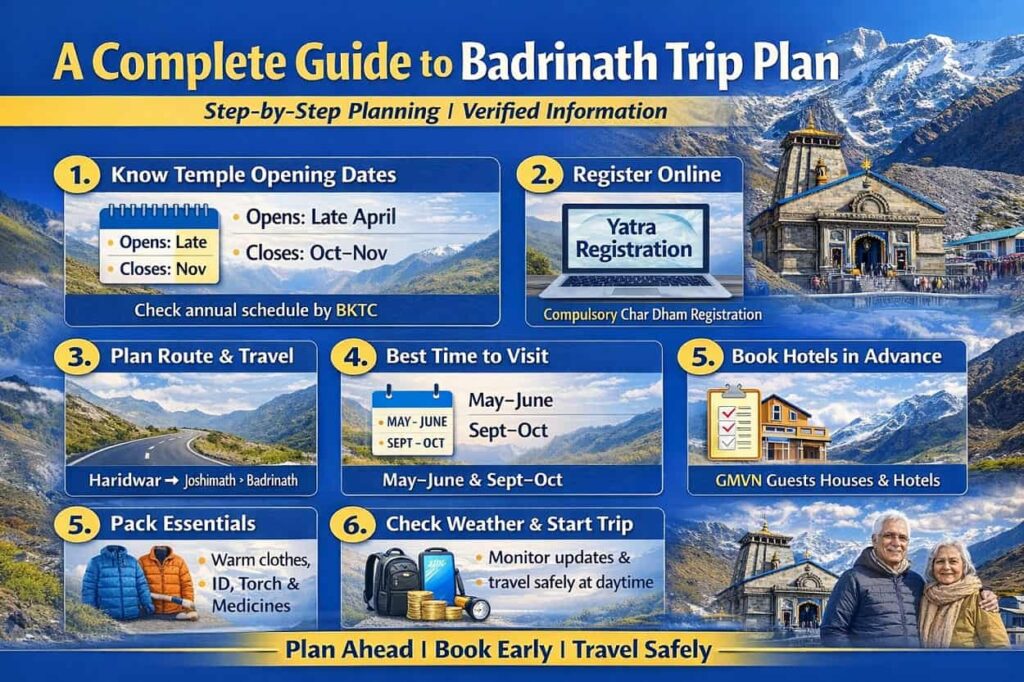

The Char Dham Yatra is one of the most sacred Hindu pilgrimages in India, covering four holy Himalayan shrines — Yamunotri, Gangotri, Kedarnath, and Badrinath. Located in the Garhwal region of Uttarakhand, this pilgrimage is spiritually rewarding but physically demanding due to high altitude, unpredictable weather, and mountainous terrain.
Whether you are a first-time pilgrim or an experienced yatra traveler, proper planning and awareness are essential. These Chardham Yatra travel tips will help you complete the journey safely, comfortably, and with peace of mind.

1. Best Time to Visit Chardham Yatra
Choosing the right time is the foundation of a successful Char Dham Yatra.
- Ideal months:
- April to June: Pleasant weather, clear roads, but heavy pilgrim rush
- September to October: Fewer crowds, stable climate, best for senior citizens
- Avoid:
- July–August (Monsoon season): Frequent landslides, roadblocks, and travel delays
For beginners, September is considered the safest and most balanced month.
2. Mandatory Chardham Yatra Registration
Char Dham Yatra registration is compulsory for all pilgrims.
- Registration is done online through the Uttarakhand government system
- You must carry:
- Government-issued ID proof
- Yatra registration confirmation
- Medical certificate (recommended, especially for Kedarnath)
Without valid registration, entry at checkpoints may be denied.
3. Plan Your Route & Itinerary Smartly
A realistic itinerary reduces fatigue and health risks.
Recommended sequence:
- Yamunotri
- Gangotri
- Kedarnath
- Badrinath
Travel tips:
- Start early in the morning
- Keep buffer days for weather disruptions
- Avoid covering long distances in a single day
Experienced travelers often underestimate mountain fatigue—rest days are essential even for seasoned pilgrims.
4. Booking Transport & Accommodation in Advance
Due to limited infrastructure, advance booking is critical.
- Base cities: Haridwar, Rishikesh, Dehradun
- Book hotels, taxis, and helicopter services at least 2–3 months in advance
- Government guesthouses and registered hotels are safer options
Helicopter services are helpful for senior citizens and those with time constraints, especially for Kedarnath.
5. What to Pack for Chardham Yatra
Packing smartly can prevent most travel problems.
Essential Clothing
- Thermal wear and warm jackets (even in summer)
- Waterproof rain jacket or poncho
- Comfortable trekking shoes with good grip
- Woolen socks, gloves, and cap
Health & Safety Items
- Personal medicines + basic first-aid kit
- ORS packets, glucose, dry fruits
- Sunscreen, sunglasses (high UV at altitude)
Documents & Utilities
- ID proof & registration slip (hard + soft copy)
- Power bank, torch
- Sufficient cash (ATMs & UPI may not work)
6. Health & Altitude Precautions
High altitude is one of the biggest challenges during Char Dham Yatra.
Important precautions:
- Get a full medical check-up before travel
- Walk slowly and avoid rushing
- Stay hydrated and eat light food
- Avoid alcohol and smoking completely
Symptoms like headache, nausea, breathlessness should never be ignored. Descend immediately if symptoms worsen.
7. Road Safety & Driving Tips
If you are traveling by car or taxi:
- Avoid night driving
- Always give way to uphill vehicles
- Use horn on blind turns
- Drive slowly on narrow mountain roads
- Keep emergency contact numbers saved
Weather-related road closures are common—always check local updates.
8. Respect Local Culture & Environment
Chardham region is spiritually and ecologically sensitive.
- Dress modestly inside temples
- Do not litter; carry waste back
- Avoid plastic usage
- Follow temple photography rules
- Maintain silence and discipline in sacred areas
Responsible travel ensures preservation of the Himalayas for future generations.
9. Tips for Senior Citizens & Children
Special care is required for elderly pilgrims and kids:
- Prefer helicopter services if health permits
- Keep flexible schedules
- Carry medical history and prescriptions
- Choose hotels closer to temples when possible
Never force elders to trek if they show signs of fatigue.
10. Stay Updated & Connected
Mobile connectivity is limited in many areas.
- BSNL, Airtel, and Jio work intermittently
- Download offline maps
- Check weather forecasts daily
- Follow government advisories strictly
Local administration announcements should always be prioritized over online information.
Frequently Asked Questions (FAQs)
1. Is Chardham Yatra safe for first-time pilgrims?
Yes, with proper planning, registration, and health precautions.
2. Is registration mandatory for Chardham Yatra?
Yes, registration is compulsory for all pilgrims.
3. Which month is best for senior citizens?
September is ideal due to stable weather and fewer crowds.
4. Is Kedarnath trek difficult?
It is moderately difficult due to altitude but manageable with preparation.
5. Are medical facilities available en route?
Yes, basic medical facilities and checkpoints are available.
6. Can I do Chardham Yatra by helicopter?
Yes, helicopter services are available, weather permitting.
7. How cold does it get during the yatra?
Temperatures can drop significantly, even in summer, especially at night.
8. Is cash required during the journey?
Yes, carry sufficient cash as digital payments may not work.
9. Are children allowed on Chardham Yatra?
Yes, but only with proper care and medical fitness.
10. Can itinerary change due to weather?
Yes, weather disruptions are common; always keep buffer days.
Conclusion
The Chardham Yatra is not just a journey—it is a test of faith, patience, and preparation. While the spiritual rewards are immense, the physical challenges of high altitude, weather uncertainty, and long travel hours cannot be ignored. Whether you are a beginner pilgrim or an experienced traveler, following these Chardham Yatra travel tips will help you complete the yatra safely, comfortably, and with devotion.
Proper planning, respect for nature, and attention to health are the true keys to a successful and memorable Char Dham Yatra.
Suggested Tour