
Badrinath Dham, located in the Chamoli district of Uttarakhand, is one of the most sacred Hindu pilgrimage destinations and a key site of the Char Dham Yatra. Dedicated to Lord Vishnu, this holy town sits at an altitude of approximately 3,300 meters in the Garhwal Himalayas.
Choosing the best time to visit Badrinath is crucial because the temple remains open only for a limited period each year due to extreme weather conditions. Weather, crowd levels, road accessibility, and spiritual events all play a major role in deciding the ideal travel window.
This guide explains month-wise, season-wise, and purpose-based timing so pilgrims, senior citizens, families, and travelers can plan safely and comfortably.

Why Timing Matters for Badrinath Yatra
Badrinath is not a year-round destination. Factors that make timing critical include:
- Heavy snowfall during winter
- Monsoon landslides affecting roads
- Limited accommodation availability during peak season
- Health risks due to altitude and cold weather
- Temple opening and closing dates based on Hindu calendar
Best Season to Visit Badrinath (Quick Overview)
| Season | Months | Suitability |
|---|---|---|
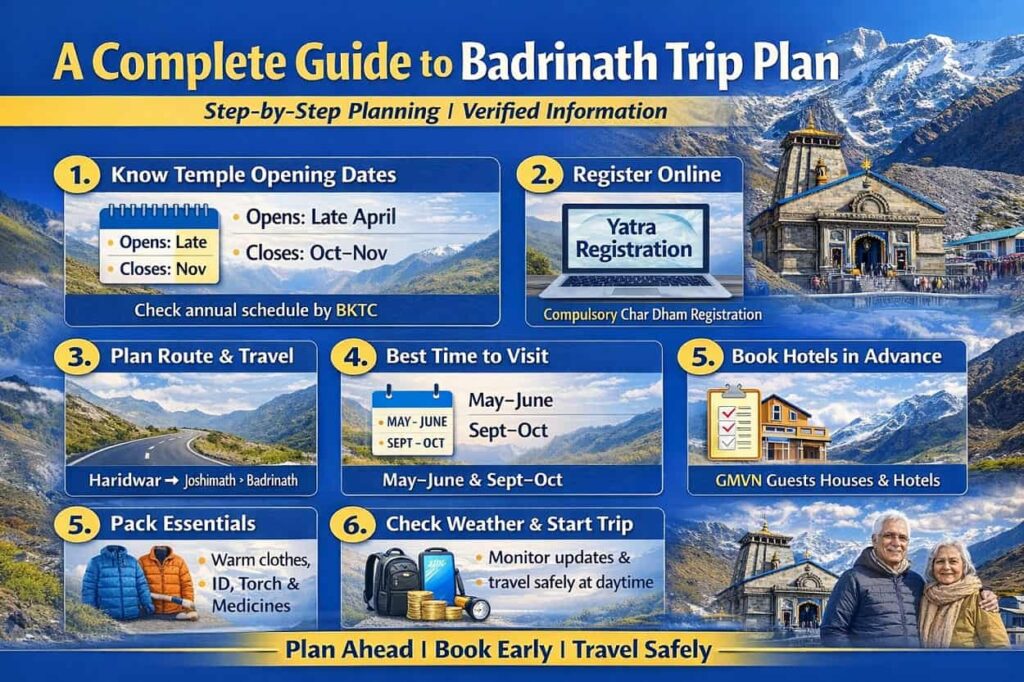
| Summer | May – June | ⭐ Best overall time |
| Monsoon | July – September | ⚠️ Risky but scenic |
| Autumn | September – October | ⭐ Ideal for peaceful darshan |
| Winter | November – April | ❌ Temple closed |
Best Time to Visit Badrinath – Season Wise Details
1. Summer Season (May to June) – Best Time to Visit
The summer months are considered the most favorable time to visit Badrinath.
Weather Conditions
- Temperature: 7°C to 18°C
- Pleasant daytime weather
- Cool nights
Why Visit in Summer
- Temple opens in late April or early May
- Clear roads and safe travel conditions
- Ideal for elderly pilgrims and families
- Maximum availability of transport and facilities
Crowd Level
- High, especially during Char Dham Yatra peak
- Expect long queues during weekends
Best For
- First-time pilgrims
- Senior citizens
- Family travelers
2. Monsoon Season (July to Mid-September) – High Risk Period
While nature looks beautiful, monsoon is not recommended for Badrinath Yatra.
Weather Conditions
- Heavy rainfall
- Frequent landslides
- Road blockages common
Risks
- Unpredictable travel delays
- Safety concerns
- Limited emergency access
Who Should Avoid
- Elderly pilgrims
- Children
- First-time visitors
Exception
- Experienced mountain travelers with flexible schedules
3. Autumn Season (Mid-September to October) – Best for Peaceful Darshan
Post-monsoon autumn is another excellent window.
Weather Conditions
- Clear skies
- Cold nights, mild days
- Temperature: 5°C to 15°C
Why Visit in Autumn
- Fewer crowds compared to summer
- Scenic Himalayan views
- Ideal for meditation and photography
Important Note
- Temple usually closes in late October or early November (Vijayadashami / Bhai Dooj)
4. Winter Season (November to April) – Not Accessible
During winter, Badrinath experiences extreme snowfall.
Key Points
- Temple remains closed
- Roads blocked due to snow
- Temperatures drop below freezing
Alternative
- Visit Badri Vishal’s winter seat at Joshimath
Month-Wise Best Time to Visit Badrinath
| Month | Travel Suitability | Notes |
|---|---|---|
| May | ⭐⭐⭐⭐⭐ | Best opening month |
| June | ⭐⭐⭐⭐⭐ | Ideal but crowded |
| July | ⭐⭐ | Landslide risk |
| August | ⭐⭐ | Heavy rainfall |
| September | ⭐⭐⭐⭐ | Scenic & calm |
| October | ⭐⭐⭐ | Cold, closing period |
| Nov–Apr | ❌ | Temple closed |
Best Time for Different Types of Travelers
Best Time for Senior Citizens
- May, early June, late September
- Stable weather
- Medical facilities accessible
Best Time for Budget Travelers
- Late September
- Lower hotel prices
- Less crowd pressure
Best Time for Photography Lovers
- September to early October
- Clear skies and snow-capped peaks
Best Time for Spiritual Seekers
- September
- Calm atmosphere and peaceful darshan
Best Time to Avoid Visiting Badrinath
Avoid traveling during:
- Peak monsoon (July–August)
- Last closing days (sudden weather changes)
- Extreme crowd days without prior booking
Travel Tips Based on Season
Summer Travel Tips
- Book hotels in advance
- Carry light woolens
- Expect waiting time for darshan
Monsoon Travel Tips
- Avoid night travel
- Monitor weather updates
- Keep buffer days
Autumn Travel Tips
- Carry heavy woolens
- Book return travel early
- Check temple closing dates
Frequently Asked Questions (FAQs)
1. What is the best month to visit Badrinath?
May and June are the best months due to favorable weather and temple accessibility.
2. Is September a good time to visit Badrinath?
Yes, mid-September offers fewer crowds and clear views.
3. Can I visit Badrinath during monsoon?
Not recommended due to landslides and safety risks.
4. When does Badrinath temple open?
Usually late April or early May, depending on the Hindu calendar.
5. When does Badrinath temple close?
Typically in late October or early November.
6. Is winter visit possible?
No, the temple and roads remain closed.
7. Best time for Char Dham Yatra including Badrinath?
May to June and September are ideal.
8. Is June too crowded for Badrinath?
Yes, June sees peak pilgrimage traffic.
9. Best time for elderly pilgrims?
May and September are safest.
10. Which season is cheapest to visit?
Late September offers better prices and fewer crowds.
Conclusion
The best time to visit Badrinath depends on your travel purpose, health condition, and crowd tolerance.
For most pilgrims, May–June and September offer the perfect balance of safety, accessibility, and spiritual fulfillment.
Suggested Tour: