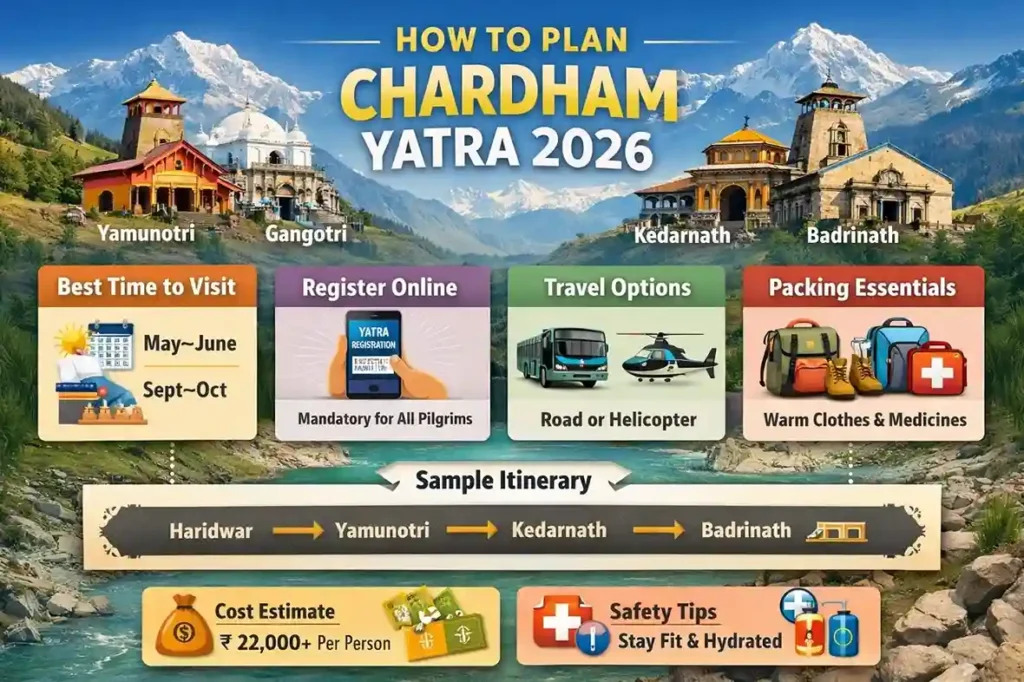
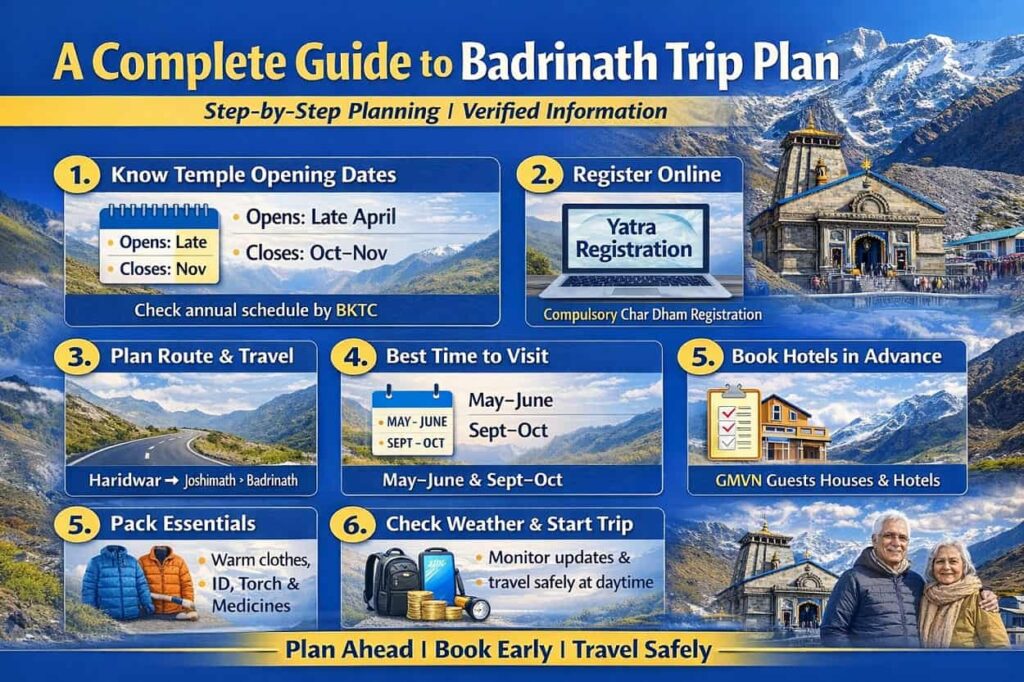
Planning a Badrinath Yatra requires structured preparation because the temple is located in the high Himalayan region of Uttarakhand (3,133 meters) and remains open only for a limited period each year. Badrinath Temple, dedicated to Lord Vishnu, is one of the Char Dhams of Uttarakhand and also part of the All-India Char Dham pilgrimage.
This detailed guide explains how to plan Badrinath Yatra step by step, including opening dates, registration, best time to visit, routes, accommodation, darshan process, health tips, and budgeting all aligned with official practices.
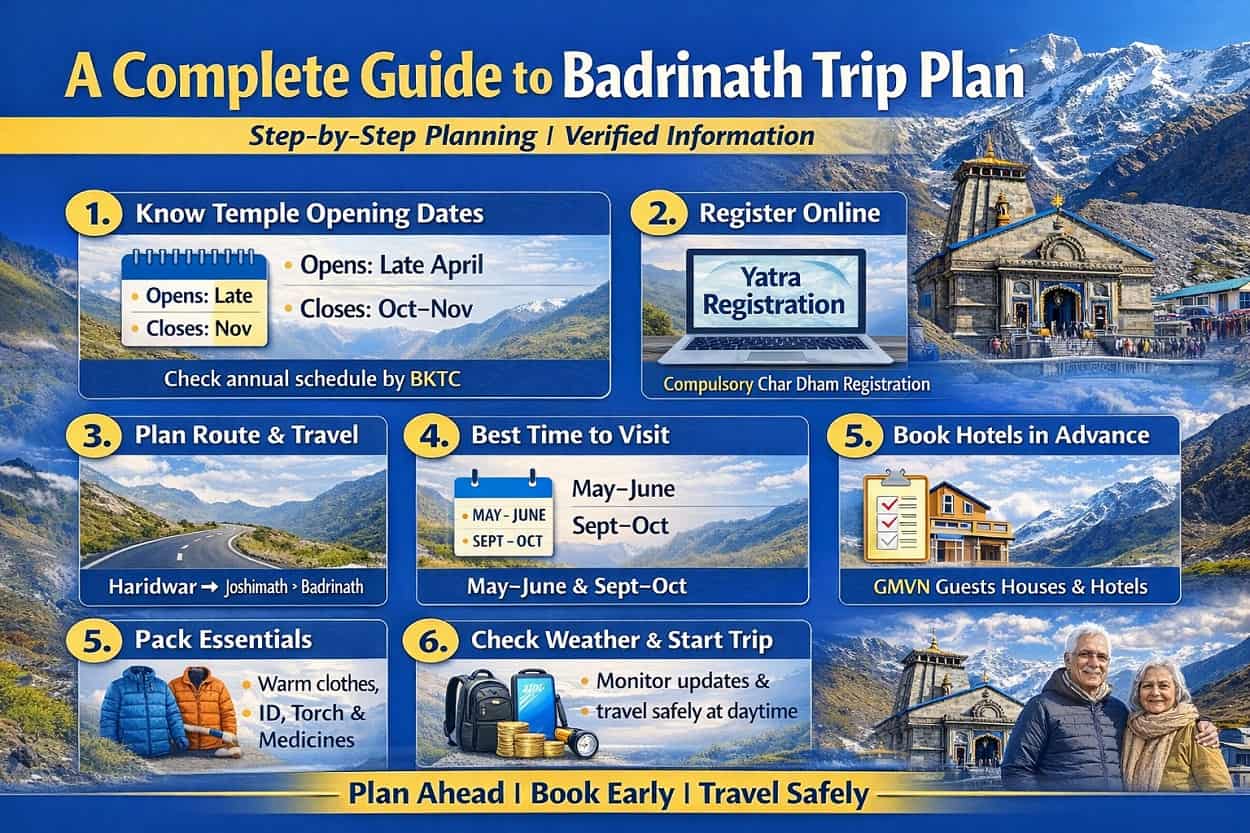
1. Know Badrinath Temple Opening & Closing Dates
Badrinath Temple opens every year on an auspicious date announced by the Badrinath–Kedarnath Temple Committee (BKTC).
The opening date is declared on Basant Panchami, while the closing date is announced around Vijayadashami / Bhai Dooj, depending on weather conditions.
General Season Window:
- Opening: Late April or early May
- Closing: October or early November
During winter, the idol of Lord Badri Vishal is shifted to Yogadhyan Badri (Pandukeshwar), where worship continues until the next yatra season.
Always confirm dates from official BKTC or Uttarakhand Tourism sources before booking travel.
2. Is Registration Mandatory for Badrinath Yatra?
Yes. Char Dham Yatra registration is mandatory for visiting Badrinath.
How to Register:
- Online through Uttarakhand Tourism Char Dham portal
- Offline registration at Haridwar, Rishikesh, Joshimath, and other checkpoints
Documents Required:
- Government ID (Aadhaar / Passport / Voter ID)
- Yatra registration slip (digital or printed)
Without valid registration, pilgrims are not allowed beyond checking points.
3. Best Time to Visit Badrinath
Choosing the right month is crucial for a safe and comfortable journey.
Best Months:
- May to June: Pleasant weather, peak season, heavy crowd
- September to early October: Fewer crowds, clear skies, colder nights
Avoid:
-
July–August (Monsoon): Landslides, road blockages, travel delays
Temperatures in Badrinath can drop sharply at night, even in summer.
4. How to Reach Badrinath – Route Planning
Step 1: Reach Haridwar / Rishikesh
- Well connected by train and road
- Nearest airport: Jolly Grant Airport, Dehradun
Step 2: Travel to Joshimath
Popular route:
Haridwar – Rishikesh – Devprayag – Rudraprayag – Karnaprayag – Joshimath
Joshimath is the last major town with good accommodation and medical facilities.
Step 3: Joshimath to Badrinath
- Distance: 45 km
- Fully motorable road
- Travel time: 2–3 hours (subject to road conditions)
Badrinath is directly accessible by road, unlike Kedarnath.
5. Badrinath Yatra by Helicopter (Optional)
Helicopter services to Badrinath operate on a limited, weather-dependent basis, mostly as part of Char Dham or Do Dham helicopter packages.
Key Points:
- Operated under UCADA regulations
- Subject to weather clearance
- Mostly charter or package-based
Helicopter yatra is suitable for:
- Senior citizens
- Time-restricted pilgrims
- Luxury travelers
For individual Badrinath travel, road routes remain the most reliable.
6. Accommodation Planning for Badrinath Yatra
Best Places to Stay:
- Badrinath town: GMVN guest houses, private hotels, dharamshalas
- Joshimath: Preferred for acclimatization and backup stay
Booking Tips:
- Book early for May–June travel
- GMVN hotels are reliable and government-approved
- Rooms near temple fill quickly during peak season
Luxury hotel options are limited due to terrain restrictions.
7. Badrinath Darshan Process & Temple Timings
Daily Darshan Schedule (Approximate):
- Morning: 6:00 AM onwards
- Afternoon break: Midday
- Evening: Aarti before temple closes
Special rituals include:
- Abhishek
- Mata Murti Puja
- Vishnu Sahasranama Path
VIP darshan is not officially guaranteed but assisted darshan may be available for senior citizens depending on crowd conditions.
8. Health, Altitude & Medical Preparation
Although Badrinath is road-accessible, the high altitude can affect pilgrims.
Common Issues:
- Mild breathlessness
- Headache
- Fatigue
Health Tips:
- Stay hydrated
- Avoid alcohol and smoking
- Take adequate rest at Joshimath
- Carry personal medicines
Senior citizens and heart patients should consult a doctor before travel.
9. What to Pack for Badrinath Yatra
Essential Clothing:
- Warm jacket / fleece
- Thermal wear
- Woolen cap & gloves
- Comfortable walking shoes
- Rain jacket or poncho
Documents:
- ID proof
- Yatra registration slip
- Hotel booking details
Other Essentials:
- Torch
- Power bank
- Basic first-aid kit
Weather can change suddenly, so packing warm clothes is essential even in summer.
10. Important Places to Visit Near Badrinath
Must-Visit Sites:
- Tapt Kund: Hot water spring for ritual bathing
- Mana Village: India’s last village near Indo-Tibetan border
- Charan Paduka: Footprints believed to belong to Lord Vishnu
- Bheem Pul: Natural rock bridge over Saraswati River
These places can usually be covered in half a day.
11. Estimated Budget for Badrinath Yatra
Approximate per-person costs:
- Road travel + stay (3–4 days): ₹6,000 – ₹12,000
- GMVN accommodation: Budget-friendly
- Helicopter (if part of package): Cost varies
Costs depend on travel season, hotel type, and route.
12. Safety Guidelines & Travel Do’s and Don’ts
Do’s:
- Check weather updates daily
- Travel during daylight hours
- Follow local administration advisories
- Carry sufficient cash (ATMs limited)
Don’ts:
- Avoid night driving in hills
- Don’t ignore landslide warnings
- Avoid over-speeding on mountain roads
Authorities may temporarily stop movement during bad weather for pilgrim safety.
13. Sample Badrinath Yatra Itinerary (4 Days)
Day 1: Haridwar / Rishikesh – Joshimath
Day 2: Joshimath – Badrinath | Temple darshan
Day 3: Mana Village sightseeing – Joshimath
Day 4: Return to Haridwar / Rishikesh
FAQs: How to Plan Badrinath Yatra
Q: Is Badrinath Yatra registration compulsory?
Ans: Yes, registration is mandatory for all pilgrims.
Q: Can senior citizens visit Badrinath comfortably?
Ans: Yes, as the temple is road-accessible, it is suitable for senior citizens.
Q: Which month is best for Badrinath Yatra?
Ans: May–June and September are considered best.
Q: Is helicopter service available to Badrinath?
Ans: Limited helicopter services operate mainly under Char Dham packages.
Q: How cold does Badrinath get?
Ans: Night temperatures can drop significantly even in summer.
Final Thoughts
Planning a Badrinath Yatra is simpler compared to other Himalayan pilgrimages, but it still requires proper timing, registration, and health preparation. With a motorable road, well-managed temple facilities, and nearby accommodation, Badrinath remains one of the most accessible yet spiritually powerful Char Dham destinations.
A well-planned journey ensures a safe, peaceful, and spiritually fulfilling experience at the abode of Lord Badri Vishal.
Suggested Tour: