
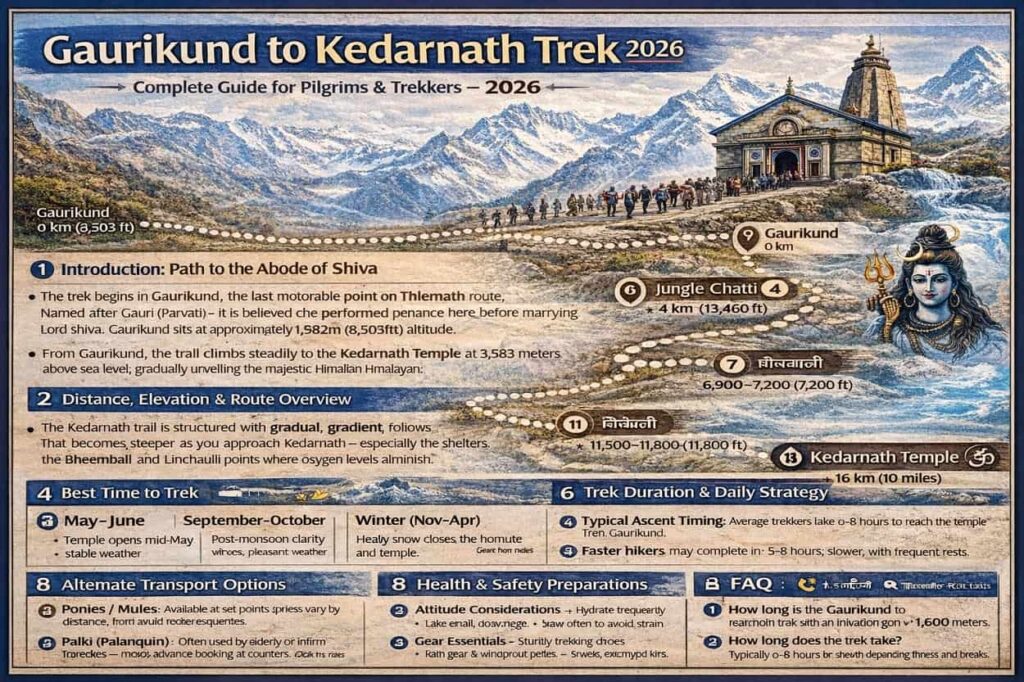
The Gaurikund to Kedarnath trek is one of India’s most iconic pilgrimages — a spiritually charged ascent through the Garhwal Himalayas to the Kedarnath Temple, one of the 12 Jyotirlingas of Lord Shiva. Every year, thousands of devotees and trekkers walk this sacred 16-kilometer uphill path, combining physical effort with devotional purpose.
1. Introduction: Path to the Abode of Shiva
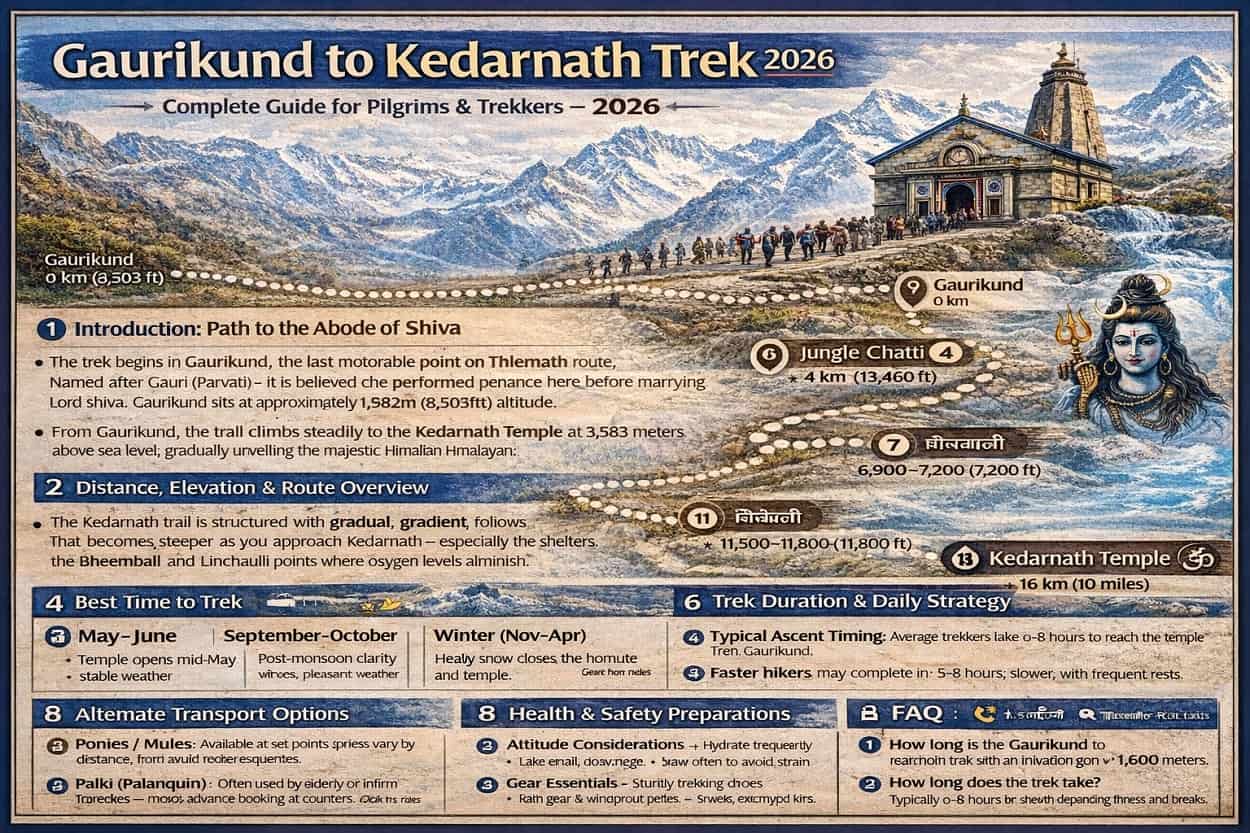
The trek begins in Gaurikund, the last motorable point on the Kedarnath route. Named after Gauri (Parvati) it is believed she performed penance here before marrying Lord Shiva. Gaurikund sits at approximately 1,982 meters altitude.
From Gaurikund, the trail climbs steadily to the Kedarnath Temple at 3,583 meters above sea level, gradually unveiling the majestic Himalayan landscape.
2. Distance, Elevation & Route Overview
| Metric | Detail |
|---|---|
| Trek Distance | 16 km one-way |
| Trek Round Trip | 32 km |
| Starting Altitude (Gaurikund) | 1,982 m |
| Temple Altitude (Kedarnath) | 3,583 m |
| Elevation Gain | 1,600 m |
| Typical Trek Time | 6–10 hours (one way) |
The trek is a continuous uphill route with gradual gradient that becomes steeper as you approach Kedarnath especially beyond the Bheembali and Linchauli points where oxygen levels diminish.
3. Key Route Stops & Landmarks
The Kedarnath trail is structured with well defined halting points that help trekkers manage distance and rest:
Gaurikund (1,982m)
-
Starting point with registration counters, medical aid, shops, and hot springs.
Jungle Chatti (4 km)
-
First major rest stop with tea/refreshments and basic shelters.
Bheembali (6–7 km)
-
Mule and pony boarding points, food stalls and shorter breaks.
Linchauli (11–12 km)
-
Higher altitude stop with GMVN rest house & tents (planned in some seasons).
Kedarnath Temple (16 km)
-
Final destination: revered Shiva shrine with accommodations and refreshment zones.
This day plan breaks the trek into manageable segments while offering natural beauty and resting opportunities at intervals.
4. Trek Difficulty & Physical Demands
Though the route is not a technical climb, several elements make it physically demanding:
Steep Inclines
The gradient increases significantly after Bheembali, and the last 5–6 km involve steeper ascents.
High Altitude
Approaching 3,500+ meters, oxygen levels drop and can lead to fatigue or altitude discomfort.
Trail Surface
Most of the path is a concrete/stone paved uphill track, but sections can be rocky or muddy in rain.
Weather can be unpredictable, sunny mornings can shift to rain by afternoon, so weather-appropriate gear is essential.
Fitness Recommendation:
-
Basic cardiovascular fitness and leg strength are required.
-
Even moderate walkers can complete the trek with frequent breaks.
5. Best Time to Trek
Ideal months:
- May – June: Temple opens mid-May stable weather.
- September – October: Post monsoon clarity and pleasant weather.
Avoid:
-
Monsoon (July–August): rain leads to landslides, slippery trails, and road disruptions near Gaurikund/Sonprayag.
-
Winter (Nov–Apr): heavy snow closes the route and temple.
Trek Timing Tip:
Start early (before sunrise 4–6 AM) to reach before wind/rain intensifies in the afternoon.
6. Weather & Risk Factors
Weather Hazards
- Sudden rainfall can cause slippery paths and mudslides.
- Light drizzle or cloud cover reduces visibility and trail traction.
Natural Disruptions
In 2025, heavy rains triggered landslides along the Rudraprayag-Kedarnath route, leaving large numbers of pilgrims stranded.
Safety Measures
- Listen to local authorities for route closures.
- Carry waterproof gear and trekking poles.
- Avoid trekking at night or in poor visibility conditions. (Local community feedback suggests risks of night trekking.)
7. Trek Duration & Daily Strategy
Typical Ascent Timing
- Average trekkers take 6–8 hours to reach the temple from Gaurikund.
- Faster hikers may complete in ~5–6 hours; slower, with frequent rests, up to 10 hours.
Sample Trek Day Plan
04:00–06:00 — Start from Gaurikund early
07:30–08:30 — Jungle Chatti rest & breakfast
10:00–11:00 — Bheembali break & refreshments
12:30–13:30 — Linchauli high-altitude pause
15:00–17:00 — Reach Kedarnath Temple area
Return can be faster if descending on foot (4–6 hours) or via pony/helicopter.
8. Alternate Transport Options
Pilgrims who may find the trek challenging can choose:
Ponies / Mules
Available at set points (prices vary by distance).
Palki (Palanquin)
Often used by elderly or infirm travelers needs advance booking at counters.
Helicopter Options
Helicopter services operate seasonally from Phata or Sirsi/Guptkashi to Kedarnath helipad weather permitting.
Note: Many helicopters land within a short walking distance of the temple always check landing schedules and weather restrictions before booking.
9. Health & Safety Preparations
Altitude Considerations
- Hydrate frequently
- Take small, slow steps
- Break often to avoid strain
Gear Essentials
- Sturdy trekking shoes
- Rain gear & windproof jacket
- Snacks, electrolytes, and water
- Basic first-aid kit
Crowd Safety
Thousands of trekkers join daily in peak season, follow guidance from route marshals and medical posts along the way.
10. Cultural & Spiritual Insights
While trekkers often focus on distance and altitude, the Gaurikund to Kedarnath trek is deeply rooted in devotion:
- Chant “Har Har Mahadev” along the way many pilgrims find spiritual motivation from surrounding chants.
- Views of the Mandakini River, waterfalls, alpine meadows and snow peaks uplift the journey.
The temple itself is revered as the final resting place of Shiva’s earthly presence in the form of a Jyotirlinga making every arduous step feel sacred.
FAQ
Q: How long is the Gaurikund to Kedarnath trek?
Ans: The one-way path is about 16 km with an elevation gain of ~1,600 meters.
Q: How long does the trek take?
Ans: Typically 6–8 hours for ascent, depending on fitness and breaks.
Q: Is the trek difficult?
Ans: Moderate to strenuous; not technical, but uphill and high altitude demands fitness.
Q: Can I trek at night?
Ans: Night trekking is not safe or advised due to terrain and lack of lighting.
Q: Are there rest stops?
Ans: Yes, Jungle Chatti, Bheembali, Linchauli and other minor resting points.
Q: Is medical aid available on the route?
Ans: Yes, along key points like Jungle Chatti and near Kedarnath base camp.
Q: Can children/elderly undertake it?
Ans: Yes, with proper support (ponies/palkis) and health evaluation.
Q: What is the best trek season?
Ans: May/June & September/October are ideal.
Q: Is water safe to drink en route?
Ans: Carry purified or boiled water; local sources may not meet safety standards. (General guidance trekking safety best practice)
Q: Does the trek get crowded?
Ans: Yes, peak months see heavy pilgrim footfall, so start early.